

Devotional Biology
-
What You Need Before Starting This Class3 Steps
-
Lesson 1: Introduction and Biology for the Believer, Part 18 Steps
-
Meet Dr. Kurt Wise (4 min video)
-
0.1 - Contrasting Two Worldviews (28 min video)
-
Read Introduction - Why This Biology Class is Unique
-
🔬 Read Lab Manual: Introduction to Labs
-
1.1 - God Desires to Be Known (25 min video)
-
Read Chapter 1.1: Creation and Revelation
-
1.2 - Christian Foundation of Science and Biology (28 min video)
-
Read Chapter 1.2: The Origin of Modern Science
-
Meet Dr. Kurt Wise (4 min video)
-
Lesson 2: Biology for the Believer, Part 25 Steps
-
Lesson 3: Biology for the Believer, Part 35 Steps
-
Lesson 4: The Living God, Part 19 Steps
-
2.1 - Divine Through Animal Life (18 min video)
-
Read Chapter 2.1: The Living God
-
2.2 - Are Plants Alive? (17 min video)
-
Read Chapter 2.2: Biblical Life
-
2.3 - The Spectrum of Perfection of Life (13 min video)
-
Read Chapter 2.3: The Spectrum of Perfection of Life
-
2.4 - The Nature of Life (15 min video)
-
Read Chapter 2.4: The Nature of Life
-
Perform Lab Exercise 2: The Nature of Life (90 minutes)
-
2.1 - Divine Through Animal Life (18 min video)
-
Lesson 5: The Living God, Part 25 Steps
-
Lesson 6: The Glory of God6 Steps
-
Lesson 7: God is Distinct, Part 16 Steps
-
Lesson 8: God is Distinct, Part 23 Steps
-
Lesson 9: God is Good, Part 18 Steps
-
5.1 – Mutualism (27 min video)
-
Read Chapter 5.1: God is Good
-
5.2 - Curse (21 min video)
-
Read Chapter 5.2: Biological Evil
-
5.3 - Biological Evil (23 min video)
-
Read Chapter 5.3: Negative Effects of the Curse
-
5.4 - Our Responsibility to Biological Good & Evil (26 min video)
-
Read Chapter 5.4: Goodness of the Creation
-
5.1 – Mutualism (27 min video)
-
Lesson 10: God is Good, Part 22 Steps
-
Lesson 11: God is Person, Part 16 Steps
-
Lesson 12: God is Person, Part 28 Steps
-
6.4 - Animal Intelligence (26 min video)
-
Read Chapter 6.4: Biological Intelligence Continued
-
6.5 - Animal Will (27 min video)
-
Read Chapter 6.5: Organismal Will
-
6.6 - Animal Personality (35 min video)
-
Read Chapter 6.6: Biological Emotions
-
6.7 - The Origin of & Responsibility to Personhood (22 min video)
-
Read Chapter 6.7: The Origin of Personality
-
6.4 - Animal Intelligence (26 min video)
-
Lesson 13: God is Person, Part 34 Steps
-
Lesson 14: God is Person, Part 42 Steps
-
Lesson 15: God is Love, Part 16 Steps
-
7.1 - The Anthropic Principle & the Earth (25 min video)
-
Read Chapter 7.1: God is Love
-
7.2 - The Anthropic Principle & the Solar System (25 min video)
-
Read Chapter 7.2: Solar System Structure
-
7.3 - The Anthropic Principle & Atoms (29 min video)
-
Read Chapter 7.3: Necessary Small-Scale AP Characteristics
-
7.1 - The Anthropic Principle & the Earth (25 min video)
-
Lesson 16: God is Love, Part 25 Steps
-
Lesson 17: The Sustaining God, Part 16 Steps
-
Lesson 18: The Sustaining God, Part 22 Steps
-
Lesson 19: God is One, Part 16 Steps
-
Lesson 20: God is One, Part 22 Steps
-
Lesson 21: God is Three11 Steps
-
10.1 - Climatic Variety (14 min video)
-
Read Chapter 10.1: Three Persons
-
10.2 - Land Biome Variety (14 min video)
-
Read Chapter 10.2: Land Biome Variety
-
10.3 - Water Biome Variety (15 min video)
-
Read Chapter 10.3: Water Biome Variety
-
10.4 - Biodiversity (20 min video)
-
Read Chapter 10.4: Biodiversity
-
10.5 - Responsibility to Biodiversity (17 min video)
-
Read Chapter 10.5: Diversity: Our Responsibility
-
Test - Chapter 10
-
10.1 - Climatic Variety (14 min video)
-
Lesson 22: God of Hierarchy, Part 16 Steps
-
Lesson 23: God of Hierarchy, Part 25 Steps
-
Lesson 24: God of Hierarchy, Part 32 Steps
-
Lesson 25: The Almighty God, Part 16 Steps
-
Lesson 26: The Almighty God, part 22 Steps
-
Lesson 27: God the Word, Part 16 Steps
-
Lesson 28: God the Word, Part 22 Steps
-
Lesson 29: Fullness of God, Part 16 Steps
-
Lesson 30: Fullness of God, Part 23 Steps
-
Lesson 31: Fullness of God, Part 32 Steps
-
Lesson 32: History of Life9 Steps
-
15.1 - Biblical Chronology (26 min video)
-
Read Chapter 15.1: The Communicating God
-
15.2 - The Creation Week (18 min video)
-
Read Chapter 15.2: Creation Week
-
15.3 - The Edenian and Ante-Diluvian Worlds (21 min video)
-
Read Chapter 15.3: The Edenian Epoch
-
15.4 - The Flood & Arphaxadian Epoch (26 min video)
-
Read Chapter 15.4: Arphaxadian Epoch
-
Test - Chapter 15
-
15.1 - Biblical Chronology (26 min video)
-
Optional Lesson 33: Appendix on Evolution4 Steps
Read Chapter 2.1: The Living God

In the Bible, God is repeatedly described as the living God, the God who lives, He Who lives forever, and He Who lives forever and ever. God Himself claims He lives and that He lives forever. He is described as the living redeemer and the living Father. Jesus is called the bread of life, the light of life, the Prince of life, the Word of life, the living stone, the ever-living Word, life, eternal life, the One Who was dead but now lives, and the One Who was dead but now lives and lives forever. Life is clearly one of the attributes of God Himself.
In creating the physical world to illustrate His invisible attributes (Rom. 1:20), God created organisms to illustrate His attribute of life. God created plants (Gen. 1:11-12) and living ‘creatures’ (‘created’ beings) in the sea (Gen. 1:20-21), the air (Gen. 1:20-21), and the land (Gen. 1:24). Even now, all living things are in His hands (Job 12:9-10) and are held together by ‘the word of His power’ (Heb. 1:3). God created and holds together everything that biologists study (Col. 1:16-17).
Created Life
Different Types of Life
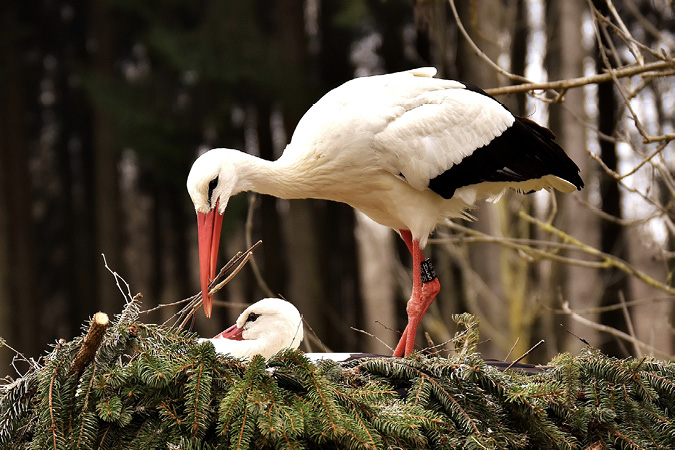
Intuitively, most people seem to have a sense that there are fundamental differences between plants and animals and further distinctions between the life of animals and the life of humans. Animal life seems to deserve more respect than plant life, and human life seems to deserve even more respect than animal life. Even aside from biblically-defined morality, there are also legal distinctions between killing a plant, killing a cheetah and killing a human. Could this be because plants and animals and humans differ in some fundamental manner?
Divine Life
Because life is part of the very nature of God, He has always lived and will always live. Life is an attribute of God. It is also important to remember that God is completely distinct from His creation and not to be confused or considered equal with it. Likewise, His attributes are distinct from similar qualities in His creation. The life of God is uncaused. It had no beginning, no cause, and no creator. The life of God is also autonomous. It is dependent upon nothing else for its continued existence. And, because God Himself is infinite, the life of God is probably infinite and unbounded in quality.
Consequently, the first great division of life is divine life on the one hand, possessed only by God, and creature life on the other hand, which is all other life. Whereas divine life is uncaused, autonomous, and infinite, creature life was created by God, is completely dependent upon God for its continued existence, and is limited in quality. This distinction is our first indication that not all life is the same, and a hint that even among creature life there might be different types of life.
The Life of Spirit Creatures
God created both physical beings and non-physical (or spiritual) beings (“…by Him were all things created… visible and invisible…”: Col. 1:16). Among the invisible things, the Bible describes spirit creatures that God created (e.g. angels, cherubim, seraphim). Among them, only the cherubim are explicitly described as living (Ezekiel 1:5-25; 3:13; 10:15-22). The other spirit creatures are nowhere explicitly described as ‘alive’ or ‘dead’ or ‘dying’.
However, the activity of these spirit creatures, as well as other similarities to what we know to be living beings, would suggest that these spirit creatures are living beings as well. Since no reference is made to the death of any of these spirit creatures (even in the lake of fire), the life of spirit creatures is probably unending. And, since these are spirit creatures—not having (or having need of) physical bodies—it is likely that they possess a different kind of life from living creatures with bodies, so it is listed here as a distinct type of creature life.
Nephesh Life
Creatures that do have physical bodies were brought into being in four different creation events in Genesis 1: plants on Day Three; sea creatures and birds on Day Five; land animals on Day Six; and humans later on Day Six. Of these, the Bible explicitly describes several of them as living—and dying. Animals of the sea are described as living and dying. Animals of the air, such as birds and bats are described as living and dying. Animals of the land are described as living and dying. Among the animals of the land, even creeping things, like insects, amphibians, and rodents are described as living and dying. Humans are described in various places as alive, dead, or dying, even those newly born (II Sam. 12:18-23; I Kings 3:18-27) and those in the womb (Ex. 21:22-25).
More specifically each category of beings is described in the Hebrew as nephesh hayim (translated as ‘living creature’ for water creatures and birds in Gen. 1:20-21, ‘living creature’ for land animals in Gen. 1:24-25, and ‘living soul’ for humans in Gen. 2:7). Thus, according to Scripture, humans and animals possess what might be described as nephesh life (or soul life). Nephesh life would then be a type of creature life found in creatures that by nature have both bodies and souls.
It is also likely that there is a different life possessed by humans and animals, for the Bible treats them as very different types of organisms. Some of the differences include: animals and humans were created in separate creation events; humans were formed directly by God, rather than by divine command (compare Gen. 2:7 with Gen. 1:20 and 24); God breathed life into humans directly (Gen. 2:7b); humans, and only humans, are the image of God; humans were made rulers over the animals; and the human soul continues forever, whereas the soul of animals apparently dies at the death of the animal’s body (Eccl. 3:21). So, it is likely that there are at least two very different types of nephesh life: human life and animal life.